6 min Read
5 Ways to Apply Michael Jordan’s Championship Mentality to Your Lockdown Routine
Weeks no longer start on Monday and end on Friday: they begin Sunday night with the latest episodes of The Last Dance and continue on for six days and twenty two hours before the next airings.
For a sports junkie like me, there’s no way to fill the void left from the disappearance of the NBA, the MLB, and March Madness, but a ten hour deep dive into one of the greatest teams in sports history certainly beats half-assed NBA 2K or HORSE tournaments. At a time when everything is being suspended — even music albums — it’s refreshing to have something new to escape into, albeit for only a couple hours. Whether you’ve had a hard time adjusting to a sheltered-in work life on Zoom or are looking for a way to motivate yourself in a time that feels like one long lazy Sunday, who better to take advice from than the NBA goat? A tireless worker that stopped for nothing in his quest for greatness. Here are five tips to consider while in lockdown:
Don’t be afraid to care
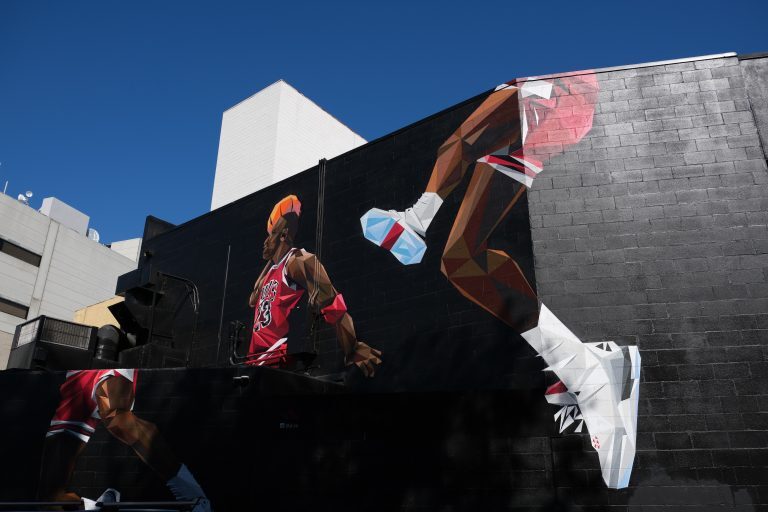
Before the first episode of the series aired Jordan said that people are “going to think that I’m a horrible guy” once they see how he treated his teammates. While the worst is reportedly yet to come, it would be impossible to talk about Jordan’s legacy without detailing his championship mentality that bordered on sociopathic. Bulls center Will Perdue said that they wondered if Jordan had feelings, and when he won his first title in 1991 the iconic photo of crying Jordan gripping the Larry O’Brien trophy as if it were a newborn shocked his teammates. The only emotions they had ever seen from him before that were anger or frustration, and to see the product of all of that hard work was jarring. Consecutive Playoff losses in 1989 and 1990 to the “Bad Boy” Pistons drove Jordan crazy: “The Jordan Rules” were literally designed to injure him and rather than back down he took it upon himself in the 1990 offseason to add muscle so that he could “administer pain.” He set the standard for what it took to win, forcing his teammates to adopt that same work ethic and in turn raise the team’s confidence. If we all had Michael Jordan’s drive in our respective fields then we’d be living in a utopia, and having that motivation in a pandemic is even more far-fetched. But the time for us is there, and rather than trying to take on the world consider applying this focus to one specific task.
If it ain’t broke don’t fix it
Phil Jackson dubbed the 1997-98 season “The Last Dance” before it even began. Why break up a two-time champion on its way to a three-peat? You’d have to ask Jerry Krause. The Bulls general manager who drafted Jordan and traded for Pippen and Rodman quickly became the villain of the series, and thus far it’s unclear why he decided to hit the reset button on a team that very well could have four-peated. (Your 1999 Eastern Conference champ? The eighth-seeded New York Knicks.) In a time when it seems like our pre-quarantine conception of normal may no longer exist, it’s hard to feel secure in anything right now. But if you’ve got anything that’s been working for you: a certain food place; a good exercise routine; an assignment that seemed promising; stick to it. Those constants that you can lean on become that much more meaningful in times like these.
Check your ego at the door
There is an illness in the NBA that can only be transmitted by winning a title: the “Disease of More,” coined by Pat Riley, explains why championship teams are dethroned not by other, better teams but by themselves. The “more” that was once the championship is no longer enough, and they now seek other things: more money, more endorsements, more opportunities. Scottie Pippen’s seven-year $18 million contract was a primary focus of the first two episodes, and while Pippen seemed to sour over being grossly underpaid in the 1998 season, prior to that he remained a solid teammate. It’s kind of amazing that the Bulls never really suffered from the Disease of More, and on top of that they added Dennis Rodman, one of the most hated players from their Pistons rivalry, into their core. Yet, Pippen and Jordan held no grudges against Rodman and respected him for who he was. Similarly, Rodman had no issues with accepting his role as a rebounding and defensive specialist and despite all of the partying would *almost* always be present at practice. When working with others, humility goes a long way; realize that the common goal is bigger than any one person — even Michael Jordan.
Hold yourself accountable and be honest with each other
During an early regular season game in the 1997-98 season with the Bulls struggling and Pippen still injured, Rodman got ejected, leaving Jordan out there by himself. “Dennis knew he f*cked up,” says Jordan, and after the game he knocked on Jordan’s hotel room door — something he never did — and asked if he had an extra cigar. It was Rodman’s way of saying “my bad,” and shows the accountability necessary to sustain a championship team like the Bulls. Sharing a smoke is nearly impossible right now, but if you’ve messed up with a colleague recently consider hopping on a Zoom call with them. Maybe they’ll be interested in virtually Juuling with you.
Treat yourself
One of my favorite parts of The Last Dance are the interviews of a present-day Jordan sitting in his all-white mansion. They are candid, occasionally expletive-laden reflections that add color and emotion to the old footage. It’s no secret that Jordan enjoys himself a drink, and next to him is a glass of a brown alcoholic beverage. After the first two episodes it was revealed that that drink is actually from an $1800 bottle of tequila, showing how even in retirement Jordan still holds himself to a certain standard of living. In times like these it’s okay to not write that book or have a mapped out schedule that capitalizes on all of your newfound free time. Sometimes you just need to escape into the less productive things that make you happy — and that’s okay.
Resources




Start running smarter local campaigns today.
Let’s show you how Hyperlocology powers performance at every location.